Coffee to water ratio, with worked examples
Calculate coffee and brewing water by mass, including a simple 1:16 example and reverse calculation.
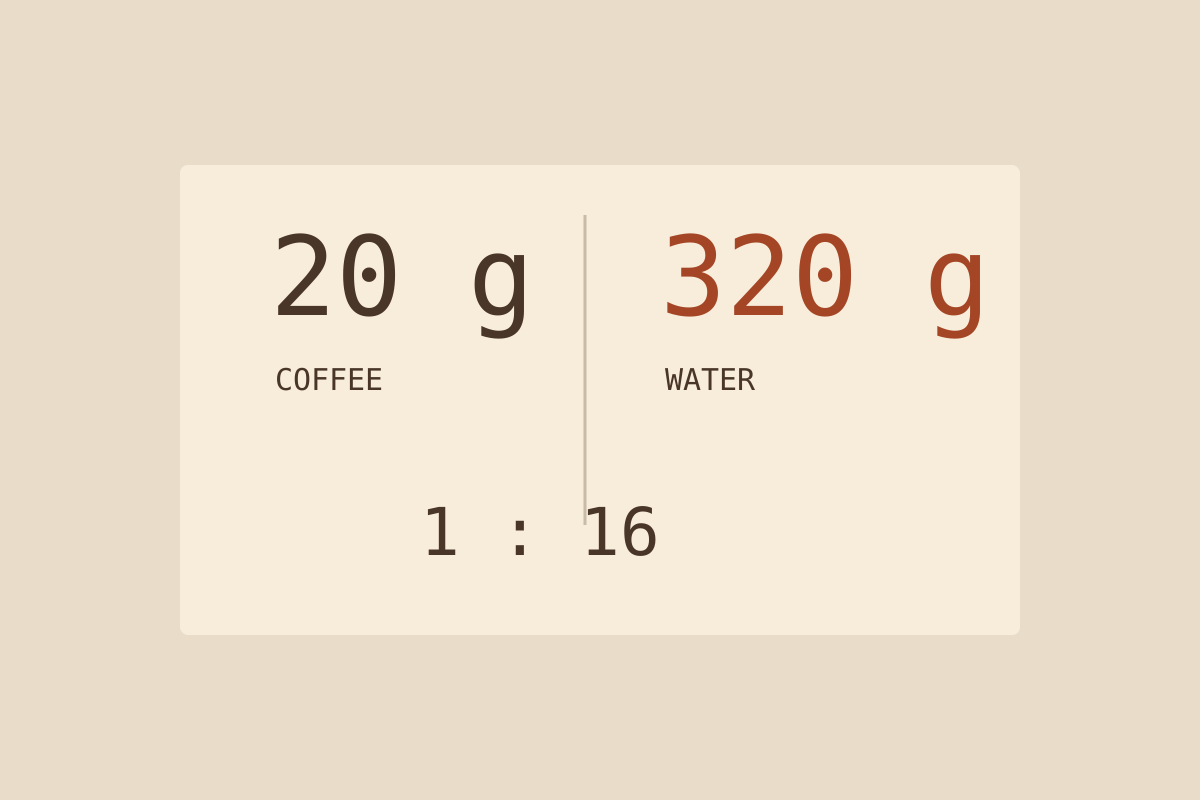
With 20 g of dry coffee and 320 g of brewing water, the coffee to water ratio is 1:16. Each gram of coffee has 16 g of water. This is a worked example you can measure, not a claim that one ratio produces the best cup for everyone.
Calculate the water
For a chosen 1:16 ratio, multiply the coffee mass by 16. A 15 g dose calls for 240 g of water. A 25 g dose calls for 400 g. The units stay in grams on both sides, so there is no need to convert scoops into volume.
| Dry coffee | Brewing water at 1:16 |
|---|---|
| 15 g | 240 g |
| 20 g | 320 g |
| 25 g | 400 g |
Use the amount of coffee that suits the brewer’s capacity. Scaling the arithmetic does not make a small brewer large enough for the resulting batch.
Work backwards from the water
For 300 g of brewing water at the same ratio, divide 300 by 16. The answer is 18.75 g of coffee. If your scale only displays whole grams, choose a practical rounded dose and record what you actually used.
At 19 g coffee and 300 g water, the ratio is approximately 1:15.8. Calling it exactly 1:16 would hide the rounding. You do not need extra decimal places to make a useful brewing note.
Keep the comparison fair
The water poured into a brewer is not necessarily the mass of the finished drink. Water remains in the grounds, and some may remain in the equipment. Use brewing water input for the calculations on this page.
Espresso recipes often describe beverage yield instead. Keep those records separate. When adjusting a filter or immersion recipe, write down the coffee dose and water input alongside the grind setting and method, so the ratio has a clear meaning.